by Robert Bowie, Jr. | Nov 23, 2021 | Featured, Personal
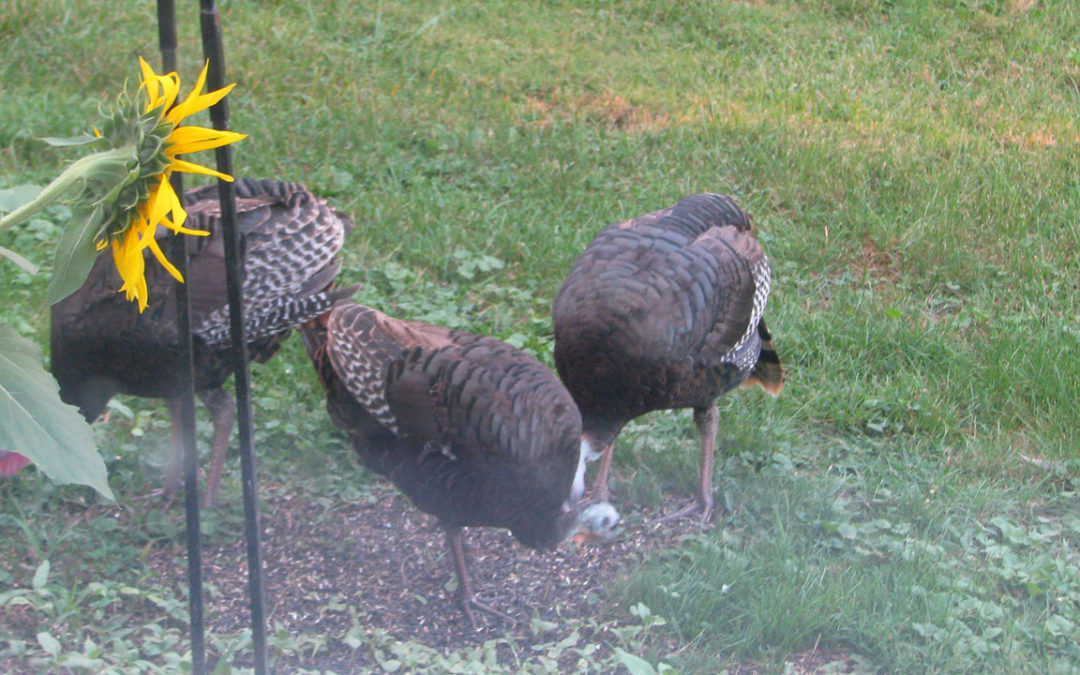
This is the time when we gather together and stop to appreciate each other, grateful for the friends we share and the bounty of the life we have. It is a shared life on this planet.
We are particularly thankful in beautiful Monkton, where we live, and very fortunate to occasionally have wild turkeys who gather to eat the spillover bounty from the bird feeders and to visit the gardens and fields of sunflowers to eat the seeds.
Especially for them, I guess, it’s a shared planet.
Happy Thanksgiving to everyone!

by Robert Bowie, Jr. | Nov 16, 2021 | Featured, Personal, Poetry
This is the story behind one of the sonnets in my upcoming book.
Sometimes you have to be far above a mistake before you acknowledge that you made it. In my case, it was flying from Belize and looking out the window more than 25 years ago.
The Blue Hole of Belize is a prehistoric giant crater which is over 400 feet deep and 43 miles out to sea from Belize City. From Ambergris Key, an offshore island east of Belize City, depending on weather conditions, it is about a 2 1/2 hour rough ride in a small Boston Whaler.
The Blue Hole was made famous by Jacques Cousteau in 1971 when he brought his ship The Calypso to the Blue Hole to chart its depth and explore its history.
Almost 30 years later, in the summer of 1997, an expedition of cave divers went in to document its underwater stalactite caves and search for its bottom depths.
Around this time, I went with several expert divers. We found it was pretty much empty of sea creatures and very cold as you descended ever deeper into it. We went down 150 feet to the nitrogen limits for 2 minutes. Our flashlights beams dimmed into the nothingness in that dark. If you looked up, far above us, the sky was like a distant open manhole cover and was our only meaningful light. After listening in the silence to our breathing for the two minutes, we ascended slowly with our bubbles to avoid nitrogen build up in our blood stream. It was very dark, cold, claustrophobic, and dangerous. Other divers had reported the same thing. After that dive I decided: “Well, been there, done that; never again.”
A few years later, when I was again in Belize to dive the outer islands, two Ambergris Key teenage brothers with a little Boston Whaler bet me a case of beer one night in a beachfront bar that if I went with them the following morning, it would be the most amazing dive I’d ever done. I refused and refused until I took the bet. This was a very stupid thing for me to have done.
In December 2018, 20 years later, two small submarines were sent to map the Blue Hole’s interior. At the bottom they discovered the bodies of two of the three divers who had gone missing while diving there over the years.
The Blue Hole in Belize
Was I the fool of this sinkhole of the sea
Or a pupil in this aqua ocean?
As I fly home it looks back at me
Without memory or emotion.
Three days ago, while taunting me, Miguel
Said: “You’ve dived it but not with me before.
I dive it deep. I dive it right to hell.”
He took my money but wouldn’t tell me more.
Off the boat, with Miguel still behind,
We checked our gear and descended into cold,
Deeper, darker, to fear of a different kind:
Sharks. Hundreds of them. Darting from the shadows.
At the boat Miguel offered a helping hand,
Laughing.” You understand? We chummed it man.”

by Robert Bowie, Jr. | Nov 9, 2021 | Featured, Politics
Can you hear? Paul Revere is calling!
I have always believed that the genius of America is derived from the ability of its people, from all walks of life and differing backgrounds, to talk together and educated each other.
I am not alone on this.
In the 1830s, almost 50 years after America was founded, Alex de Tocqueville, a visiting French diplomat wrote: “The greatness of America lies not in being more enlightened than any other nation, but rather in her ability to repair her faults.”
The way America has “repair[ed] her faults” and ensured its greatness has been “we the people” talking together and educating each other, and with the collective credibility of our conversation we voice our conclusions with our votes.
The founding fathers universally opposed political parties.
They feared that political parties could act as intermediaries for the voice of the electorate. I would argue that the political parties have now evolved to protect only themselves.
Our elected representatives are heavily funded by the political parties and rewarded with better health and retirement benefits than those whom they represent. They vote in lockstep with the party interests.
Recently the political parties have divided us through gerrymandering, voter suppression, and by defining the issues of our conversation, and we are polarized.
The parties relentlessly continue to further increase their power and our polarization at our expense. Most recently, in 19 states they have limited our collective voice, which is the vote. The parties now just fight each other for dominance rather than represent their constituents.
The polarization of America threatens not only our greatness but now even our democracy.
We no longer talk to each other to repair America’s faults.
We the people are not the enemy. The Political parties are.
So what do we the people do?
First, we pass the deadlocked voting rights legislation presently pending in Congress, which would curtail gerrymandering and preserve every American’s right to vote.
Second, we must regain our obligation to share our collective conversation and educate each other from our differing experiences.
Sixty years ago, John F. Kennedy spoke to the nation and said “Ask not what your country can do for you. Ask what you can do for your country.”
What is asked of us now, other than to pay taxes, which we avoid as much as possible? That’s about it. With little or no responsibility to our county, we have become entitled, lazy, and self-centered.
The Second World War brought us together as we marshaled our resources to protect democracy and the free world against the fascist states of Germany, Italy, and Japan. These countries lost their freedom from the inside when they let totalitarianism take over. In contrast, the American people worked together side-by-side, talked together, and came out of that war as the most prosperous nation in the world up until now.
What if we each agreed to a universal commitment to serve the country for just one year to work together side by side, talking together and in so doing eradicate the political parties’ polarization which now separates us?
The 2022 election, one year away, will set in stone for ten years the gerrymandering and voter suppression which has been imposed on us. We the people must take our government back now or perhaps lose it forever to the power brokers that were once middleman and now are our kings. We are not their servants.
But that’s not all we have to do. We have to individually accept the responsibility to talk to those who are our perceived enemy and not lecture each other but listen and learn and become great again.
I have been blessed with critics of my points of view on this blog and on more than one occasion I have asked to meet them and buy them a beer. In each case, I have made a friend with a different political perspective, and an American friend at that.
We are not the enemy! We hold the genius of America in our hands if we will only embrace our responsibility and get rid of those who would make us slaves to their superiority and greed.
It is time to raise up before it is too late. It’s up to us to protect our democracy and our country.
Wake up! Paul Revere is calling.
by Robert Bowie, Jr. | Oct 31, 2021 | Featured, Personal
This is a Halloween ghost story that may or may not be true. I’m not sure.
Since my post of a week ago and the coming of Halloween, I couldn’t get Eno English out of my head. After almost 60 years why did I remember his name?
A week ago, I wrote about this year’s Head of the Charles Regatta, and the beautiful clean water of the Charles River. This was in contrast to years ago when I was in ninth grade and the river was so dirty, we rowed past floating prophylactics and tin cans and even a floating pillow that turned over and was a dead body — later identified as Eno English.
It didn’t occur to me until last week, but I think I know where Eno might have come from.
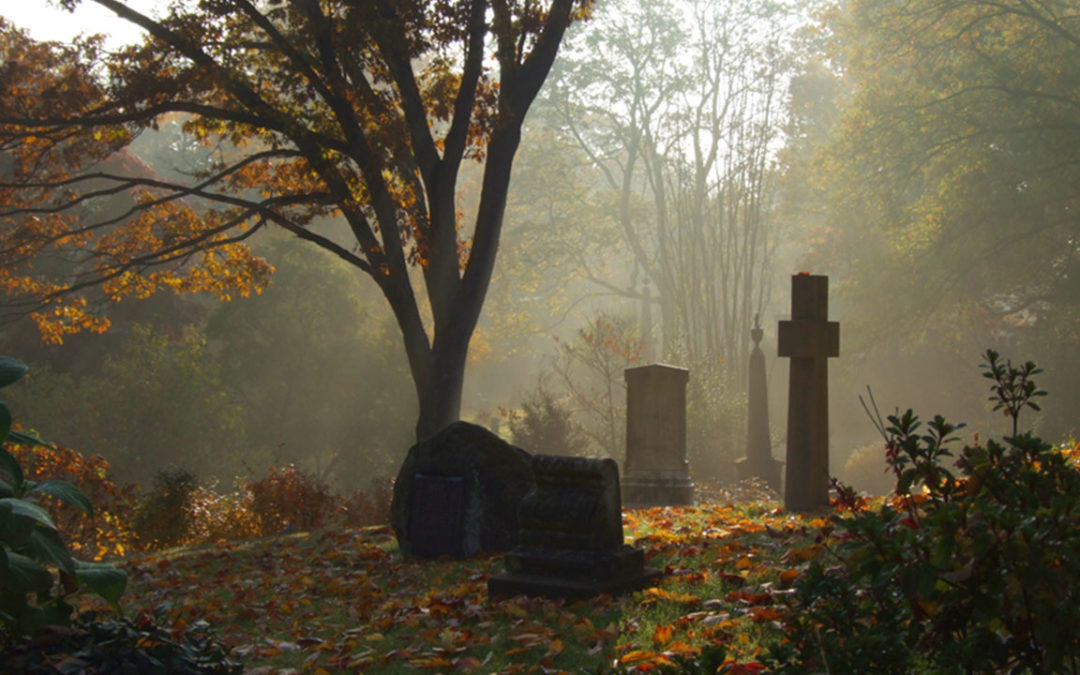
I grew up in a little neighborhood called Coolidge Hill near the boat house and dock where Eno was found floating in the Charles. Coolidge Hill is located in between the Cambridge and Mount Auburn cemeteries and the little school I attended.
Mount Auburn cemetery was created in the 1831 to house the Cambridge aristocracy on 170 acres of high rolling land with little walks along majestic ponds surrounded by an impenetrably high black iron fence.
Mount Auburn Cemetery allowed no bikes or unsupervised children. I got my first bike, a fat wheeler, in middle school. I tried but could not get past the gate house on my bike, but I decided I would not be denied.
With my first bike I became an explorer. Like Columbus was determined to find the Orient, I decided I had to find a way into Mount Auburn Cemetery. I decided I would explore what I guessed might be the unguarded back fence near the Charles River.
Late one afternoon I left school and took my bike down past the boat house and proceeded upriver along the deserted overgrown roadless river bank for a quarter mile or so to find, much to my satisfaction, that there was some fence on the western boarder of the cemetery that had fallen with the eroding high bank. It must have given way with the rains and snow over the years and had slipped down onto a very small muddy plateau next to the Charles.
When I stopped to look I saw, to my surprise, a little path leading down to the river to the left, and several loose rolls of toilet paper hanging off a low bush. To my right I saw two small shacks that had been pulled together and hidden under several small scrub trees and underbrush up closer to the cemetery and the broken fence.
It must have been late fall, after Halloween I think, because it was getting dark early and it was a school night. I concluded that hobos must’ve lived here in the summer and had left because the weather was getting cold. There was no evidence of smoking fires or habitation.
As I laid down my bike and worked my way into the underbrush, I saw there were no windows in the two shacks and the doors had been left open. As I approached one shack I stepped on several bones that looked like they had been brought down with the erosion of the cemetery. I remember them as spongy, but I pushed on through the undergrowth because I could see through the open door what appeared to be girly magazines.
This lured me on because my only other alternative had been at the doctor’s office when I had to pretend to be interested in National Geographic. I pushed closer and closer to the open door.
The magazines were scattered all over the dirt floor and there was a pile of blankets over to the right. I carefully moved into the shack and knelt down to the magazines. The sun was going down. It was getting cold. I was alone. I had to get home but as long as there was light, I was going to see what this bounty held.
As I picked up one of the water-soaked magazines I was startled by an abrupt movement under the pile of blankets and a face stared back at me.
I bolted for the door and ran for my life to my bicycle. The man stood, reached for me and yelled. I ran as fast as I could, mounted my bike and peddled furiously until I could no longer hear his breathing.
The newspapers postured that Eno must’ve fallen into the river because his fly was open when he was fished out of the water.
That was almost 60 years ago.
My little bike ride along the Charles is paved now as Greenough Boulevard. It travels along the river’s edge and into new parking lots and developments along Arsenal Avenue and Watertown.
As far as I can tell there is no record of Eno English other than in my memory. He is a ghost that lives in my imagination and shelters in my brain and only came out with a random recollection a few days before Halloween.
Sort of spooky. Time for Eno to disappear again.
by Robert Bowie, Jr. | Oct 26, 2021 | Featured, Personal, Poetry
The great thing about being a geezer is there are moments when you actually existed before history.
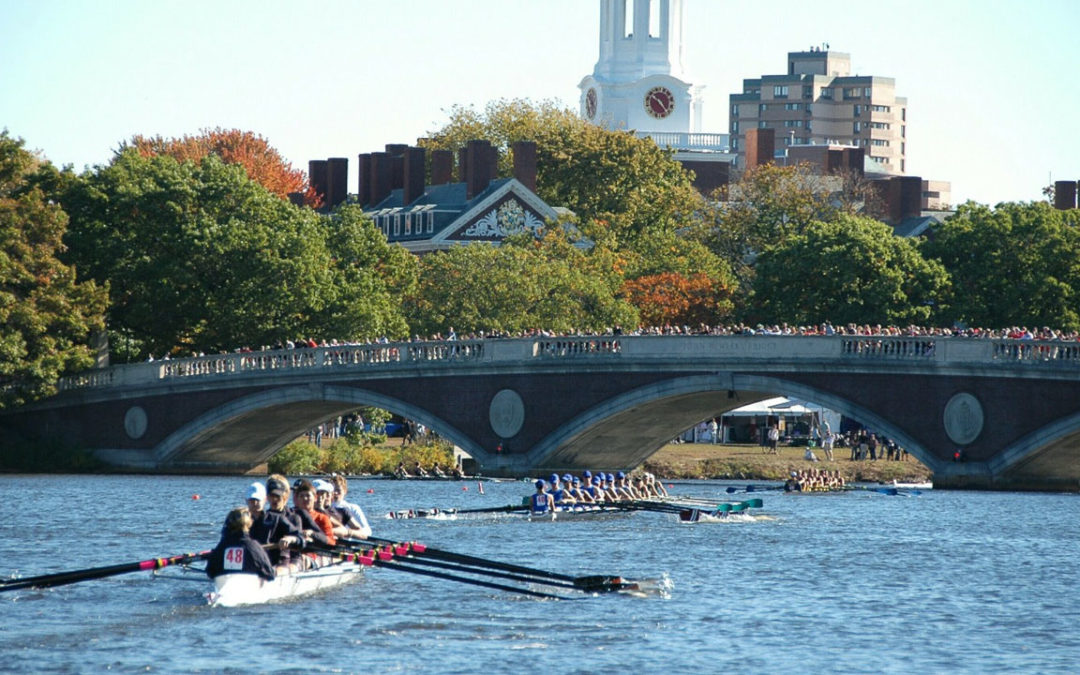
Last weekend, Head of the Charles, the world’s largest two-day regatta, with 11,000 American and international athletes in over 1900 boats competing in 61 events, was held on a three mile course (4,800 meters) on the Charles River between Boston and Cambridge Massachusetts.
On that beautiful fall weekend, more than 225,000 people gathered to watch the races either on the banks of a clean water river or shoulder to shoulder on both sides of the six bridges under which the crews travel. The race has increased in participants and prestige since its beginnings in 1965.
Now I know what you’re thinking. I am going to claim credit for something. I’m probably going to brag that I was there at the beginning or something like that but I’m not.
I was there before the beginning!
I was there back when nobody dared gather on the banks or bridges because they might fall in. Back when The Standells recorded “Love that dirty water (down by the river Charles)” in a pop hit in the ’60s. Back when I had decided I liked girls but I really hated school and was discouraged about myself and I was trying out for crew to row on a polluted river.
High School Crew
In the early spring, when I turned fifteen,
My choices were baseball, tennis or crew.
Between Boston and Cambridge I had seen
Rhythmic oars of singles, eights, fours and twos
Beneath the bridges of the Charles River.
I was appointed stroke. I paced the boat.
Like a surgeon’s stitch our sharp blades suture
The shell’s trailing razor cut as each stroke
Drives us through the smooth and glassy water
And leaves no scar. The coxswain pounds out,
On the gunnels, the rhythm of my order.
Tin cans and prophylactics float past the boat.
Our smooth and perfect rhythmic mantra broke
Beneath the bridges, into echoes: “Stroke. Stroke.”
I like these little prehistory events. They show me if I start from before the beginning, rather than in the midst of some turmoil, I can see how much has changed for the better.
